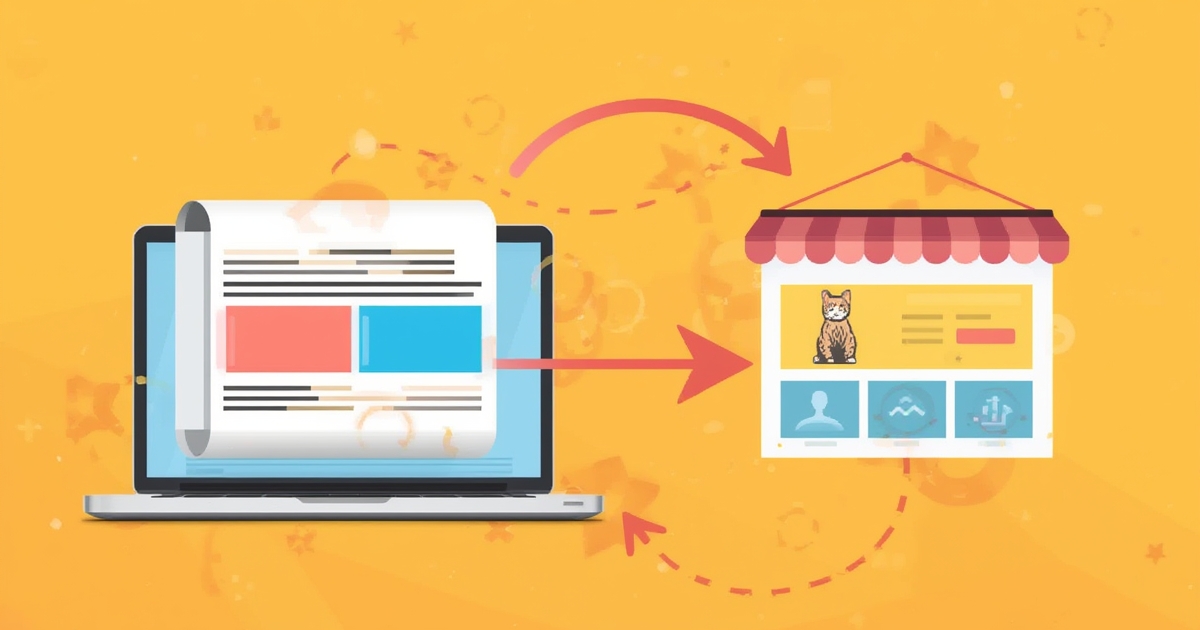
Boost your online store’s revenue in 2026. Discover the blog secret to driving massive sales, building authority, and converting visitors into loyal customers.
It’s 2026, and your online store faces unprecedented competition. To truly unlock massive sales and differentiate your brand, you need more than just great products; you need a powerful content strategy, specifically a blog designed to supercharge your blog sales. Forget outdated marketing tactics; the secret to sustained growth lies in consistently delivering value that not only attracts but also converts.
Why Your Online Store Needs a Blog, Now More Than Ever
In today’s crowded digital marketplace, simply listing products isn’t enough to capture attention or drive meaningful blog sales. Consumers are savvier, more research-oriented, and increasingly seek authentic connections with the brands they support. A blog serves as the dynamic heart of your online presence, transforming your static store into a vibrant hub of information and engagement.
Think of your blog as your store’s most articulate salesperson, working tirelessly 24/7. It answers questions, solves problems, entertains, and subtly guides potential customers toward your products. This isn’t just about SEO; it’s about building a relationship long before a purchase is even considered, laying the groundwork for sustainable blog sales.
The Power of Content for E-commerce
Content is the fuel that drives organic traffic to your online store. By consistently publishing high-quality articles, you signal to search engines that your site is a relevant and authoritative source of information. This improves your search rankings, bringing more potential customers directly to your digital doorstep.
Beyond search engines, valuable content establishes you as an expert in your niche. If you sell eco-friendly kitchenware, articles on sustainable living, healthy recipes, or the environmental impact of traditional materials position you as a thought leader. This authority builds trust, a critical factor in encouraging purchasing decisions and boosting your overall blog sales.
Building Trust and Authority
Trust is the bedrock of any successful online business. When customers feel they can rely on your expertise and genuinely benefit from your insights, they are far more likely to make a purchase. A well-maintained blog is an ongoing testament to your brand’s commitment to providing value beyond just transactions.
It’s an opportunity to showcase your brand’s personality, share your story, and connect with your audience on a deeper level. This human element is often missing in purely transactional e-commerce experiences and is a powerful differentiator that can significantly impact your blog sales over time.
Crafting High-Converting Content for Blog Sales
The goal of your e-commerce blog isn’t just to generate traffic; it’s to convert that traffic into paying customers. This requires a strategic approach to content creation, focusing on topics and formats that resonate with your target audience and gently nudge them down the sales funnel. Every piece of content should have a clear purpose, contributing to your overarching blog sales objectives.
From product reviews and how-to guides to lifestyle pieces and customer spotlights, each article offers a unique opportunity to engage and persuade. Understanding your customer’s journey is paramount to creating content that effectively moves them from awareness to purchase.
Understanding Your Customer’s Journey
Your customers go through several stages before making a purchase. At the awareness stage, they might be searching for solutions to a problem. Your blog can offer informational articles addressing these pain points. For instance, if you sell ergonomic office chairs, an article on “The Best Ways to Prevent Back Pain When Working from Home” would be highly relevant.
As they move to the consideration stage, they’re evaluating different options. Here, comparison articles, product reviews, and case studies shine. Finally, at the decision stage, they’re ready to buy. Content like detailed product specifications, testimonials, and FAQs can seal the deal. Tailoring your blog sales content to each stage ensures maximum impact.
Content Types That Drive Action
Not all content is created equal when it comes to driving blog sales. Here are some highly effective content types:
- Product Reviews and Comparisons: Offer unbiased, in-depth reviews of your products and compare them to competitors. Highlight features, benefits, and address potential concerns.
- How-To Guides and Tutorials: Show readers how to use your products effectively or solve related problems. If you sell baking supplies, offer recipes or decorating tutorials.
- Listicles: “Top 5 [Product Category] for [Specific Need],” “10 Must-Have Accessories for [Your Product].” These are highly scannable and popular.
- Behind-the-Scenes: Share your brand story, manufacturing process, or meet the team. This builds authenticity and connection.
- Customer Spotlights/Testimonials: Showcase how real customers use and love your products. This provides social proof and builds trust.
- Trend Reports: Position your brand as an industry leader by discussing upcoming trends relevant to your products.
Each of these content types, when strategically deployed, can significantly contribute to an increase in your blog sales by informing, engaging, and persuading your audience.
Optimizing Your Blog for Maximum Reach and Blog Sales
Creating compelling content is only half the battle; ensuring it reaches your target audience is equally critical for driving blog sales. This involves a robust strategy combining search engine optimization (SEO) with effective promotion across various channels. A beautifully written article hidden from view won’t generate a single sale.
By implementing SEO best practices and actively promoting your blog posts, you amplify their reach, attract more qualified leads, and ultimately boost your online store’s revenue. This synergistic approach ensures that your content works harder for your business.
SEO Best Practices for E-commerce Blogs
Implementing strong SEO is non-negotiable for maximizing your blog’s impact on blog sales:
- Keyword Research: Identify the terms your target audience uses to find information and products. Use tools like Semrush or Ahrefs to uncover high-volume, relevant keywords.
- On-Page SEO:
- Optimize headings (H1, H2, H3) with keywords.
- Incorporate keywords naturally throughout the body text.
- Write compelling meta descriptions that include your focus phrase and entice clicks.
- Optimize images with descriptive alt text and relevant filenames.
- Ensure fast page loading speeds.
- Internal Linking: Link to relevant product pages, category pages, and other blog posts within your articles. This improves navigation and spreads “link juice” across your site.
- Technical SEO: Ensure your blog is mobile-friendly, has a clean URL structure, and is easily crawlable by search engines.
- Schema Markup: Implement schema markup for rich snippets in search results, making your content stand out.
These practices collectively enhance your visibility, attracting more organic traffic that is highly predisposed to making a purchase, directly contributing to your blog sales.
Promoting Your Content Effectively
Once your content is live and optimized, it’s time to shout about it! Effective promotion extends your reach far beyond organic search:
- Social Media: Share your blog posts across all relevant social media channels. Tailor your captions and visuals for each platform to maximize engagement.
- Email Marketing: Distribute your latest blog posts to your email subscribers. This keeps your audience engaged and drives repeat traffic back to your store.
- Paid Advertising: Consider using paid ads on platforms like Google or Facebook to promote your most valuable content to a highly targeted audience.
- Influencer Collaborations: Partner with influencers in your niche to share your content with their followers.
- Guest Blogging: Write guest posts for other authoritative blogs, linking back to your own relevant content.
- Community Engagement: Share your articles in relevant online forums, groups, or communities (where appropriate and not spammy).
A multi-channel promotional strategy ensures your content reaches the widest possible audience, dramatically increasing its potential to generate significant blog sales.
Essential Platforms and Tools for E-commerce Blogging
To effectively manage and scale your blog sales strategy, choosing the right technological foundation is paramount. The platform you select will impact everything from ease of content creation and SEO capabilities to integration with your online store. Thankfully, there are many robust options available, each with unique strengths.
Beyond the core blogging platform, various tools can streamline your workflow, enhance your content, and help you analyze performance. Investing in the right suite of tools can significantly boost your efficiency and the ultimate success of your blog sales efforts.
Choosing the Right Blogging Platform for Your Store
The best blogging platform for your online store depends on your existing e-commerce platform, technical expertise, budget, and specific needs. Seamless integration is key to a frictionless customer journey and efficient blog sales tracking.
Comparison of Top Blogging Platforms for E-commerce
| Product | Price | Pros | Cons | Best For |
|---|---|---|---|---|
| WordPress (Self-Hosted) | Free (software), $5-$30/month (hosting) | Highly customizable, vast plugin ecosystem, excellent SEO capabilities, full control. | Requires some technical knowledge, responsible for security and maintenance. | Businesses seeking maximum control, flexibility, and scalability for their blog sales strategy. |
| Shopify Blog | Included with Shopify plan ($29-$299/month) | Seamless integration with Shopify store, easy to use, simple setup. | Limited customization compared to WordPress, fewer advanced SEO features natively. | Shopify store owners prioritizing simplicity and native integration without needing deep customization. |
| Ghost | $9-$199/month (Ghost(Pro)), Free (self-hosted) | Modern interface, fast performance, built-in SEO and newsletter features, membership options. | Fewer plugins than WordPress, can be more expensive for hosted version. | Content-focused businesses or creators who want a clean, fast blog with subscription features. |
| Medium | Free | Large existing audience, easy to publish, strong community features. | Less control over branding and monetization, not ideal for direct e-commerce integration. | Individuals or startups looking to quickly publish and reach a broad audience without a dedicated website. |
Integrating Your Blog with Your Online Store
Once you’ve chosen a platform, ensure it integrates smoothly with your e-commerce store. For Shopify users, the native blog is the obvious choice. For WordPress, plugins like WooCommerce bridge the gap, allowing you to display products within blog posts and link directly to your store.
Beyond the platform, consider tools for content creation (e.g., Grammarly, Canva), SEO analysis (e.g., Ahrefs, SEMrush), and analytics (e.g., Google Analytics). These tools empower you to create higher-quality content, optimize it for search, and understand its impact on your blog sales.
Measuring Success and Scaling Your Blog Sales Strategy
A blog is not a “set it and forget it” marketing tool. To truly unlock its potential for massive blog sales, you must continuously monitor its performance, analyze what’s working (and what’s not), and iterate on your strategy. Data-driven decisions are the cornerstone of sustainable growth.
By tracking key metrics and being willing to adapt, you can refine your content strategy, optimize your promotional efforts, and ensure your blog remains a powerful engine for your online store’s success well into 2026 and beyond.
Key Metrics to Track
To understand the true impact of your blog on blog sales, focus on these metrics:
- Traffic:
- Page Views: How many times your blog posts are viewed.
- Unique Visitors: How many individual people visit your blog.
- Traffic Sources: Where your visitors are coming from (organic search, social, referral, etc.).
- Engagement:
- Bounce Rate: The percentage of visitors who leave after viewing only one page.
- Time on Page: How long visitors spend reading your articles.
- Comments and Shares: Indicators of audience interaction and content value.
- Conversion:
- Conversion Rate: The percentage of blog visitors who complete a desired action (e.g., sign up for a newsletter, make a purchase).
- Assisted Conversions: When a blog post contributes to a sale, even if it wasn’t the last touchpoint.
- Revenue from Blog: Direct sales attributed to blog content.
Tools like Google Analytics are indispensable for tracking these metrics and providing insights into how your content contributes to blog sales.
Iterating for Continuous Growth
Use the data you collect to continually improve your blog. If certain topics perform well, create more content around them. If specific content formats (e.g., video embeds, infographics) lead to higher engagement, integrate more of those.
Don’t be afraid to experiment with new content types, promotional channels, or calls to action. A/B test different headlines, introduction paragraphs, or even image placements. The digital landscape is constantly evolving, and your blog strategy must evolve with it to maintain its edge and keep driving those crucial blog sales.
The blog is no longer a peripheral marketing activity; it is a fundamental pillar for any online store aiming for sustained growth and massive blog sales in 2026 and beyond. By focusing on valuable content, strategic optimization, and continuous analysis, you can transform your blog into your most powerful sales asset. It’s about building relationships, establishing authority, and subtly guiding your audience towards your products through genuine value. Start investing in your content strategy today, and watch your online store thrive.
Ready to revolutionize your online store’s sales? Dive into our comprehensive guides on content marketing, or schedule a free consultation with our experts to craft a tailored blogging strategy that guarantees results.
Frequently Asked Questions (FAQ)
What is the ideal length for an e-commerce blog post?
While there’s no single “ideal” length, posts between 1,000-2,000 words often perform well for SEO and provide enough depth to engage readers. The key is to provide comprehensive value, regardless of word count.
How often should I publish new blog content?
Consistency is more important than frequency. Aim for a schedule you can realistically maintain, whether that’s once a week or twice a month. Higher frequency generally leads to more traffic and potential blog sales, but only if quality is maintained.
Can a blog really increase my online store’s revenue directly?
Absolutely. A well-executed blog strategy can directly impact revenue by driving qualified traffic, building trust that leads to purchases, assisting in conversion paths, and improving overall brand authority and visibility.
How do I find relevant topics for my e-commerce blog?
Start with keyword research, look at competitor blogs, listen to customer questions (FAQs, support tickets), monitor industry trends, and use audience surveys. Address pain points your products solve.
What if I don’t have time to write all the blog posts myself?
Consider outsourcing content creation to freelance writers or a content marketing agency. Many e-commerce businesses successfully leverage external experts to maintain a consistent publishing schedule and ensure high-quality content for their blog sales.