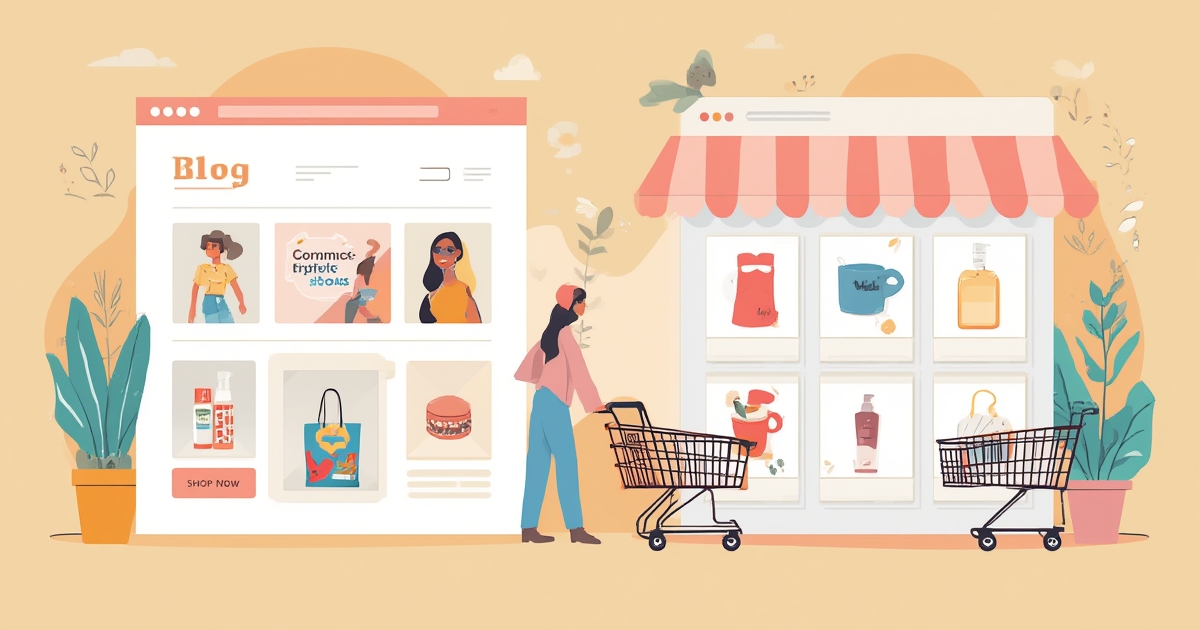
Meta Description: Transform your blog into a thriving online store with our comprehensive step-by-step guide. Learn platform selection, product strategy, and marketing to monetize your passion.
The Foundation: Why Turn Your Blog Into an Online Store?
You’ve poured your heart and soul into building a blog, cultivating an audience, and establishing your voice. Now, imagine taking that valuable foundation and transforming it into a thriving online store. This strategic move isn’t just about monetization; it’s about deepening your connection with your community, offering tangible value, and creating a sustainable ecosystem around your content.
The convergence of content and commerce is a powerful trend. Your blog already generates trust and authority, making it the perfect launchpad for an online store. By selling products directly related to your niche, you provide solutions, enhance your readers’ experience, and unlock significant revenue streams. It’s about leveraging your existing influence to build a robust business.
Consider the benefits: you’re already attracting an engaged audience who trusts your recommendations. Introducing an online store allows you to capitalize on this trust by offering curated products or services that genuinely resonate with their interests and needs. This seamless transition from content consumption to product discovery creates a powerful feedback loop, strengthening both your brand and your bottom line.
Beyond direct sales, an online store opens doors to new business models. You can offer exclusive merchandise, digital products like e-books or courses, or even subscription boxes tailored to your niche. This diversification not only stabilizes your income but also provides multiple touchpoints for your audience to engage with your brand on a deeper level. It’s an evolution, not just an addition.
Choosing Your E-commerce Platform: The Backbone of Your Online Store
Selecting the right e-commerce platform is arguably the most critical decision when building your online store. This platform will serve as the engine of your business, handling everything from product listings and inventory management to secure payments and order fulfillment. The choice will significantly impact your operational efficiency, scalability, and overall user experience.
There’s a diverse range of platforms available, each with its unique strengths, pricing models, and feature sets. Some are all-in-one solutions, while others integrate seamlessly with existing content management systems like WordPress. Your decision should be based on several key factors: your technical proficiency, budget, desired features, the type of products you plan to sell, and your long-term growth aspirations.
Ease of use is paramount, especially if you’re new to e-commerce. Look for platforms with intuitive interfaces, drag-and-drop builders, and comprehensive support documentation. Scalability is another crucial consideration; you want a platform that can grow with your business, accommodating increased traffic, more products, and expanding customer bases without requiring a complete overhaul.
Integration capabilities are also vital for a smooth transition from blog to online store. If your blog is on WordPress, a platform like WooCommerce offers native integration, allowing you to manage both your content and store from a single dashboard. For other blog platforms, you might opt for a standalone solution that can be easily linked and branded to match your existing site.
Comparing Top E-commerce Platforms for Your Online Store
| Product | Price | Pros | Cons | Best For |
|---|---|---|---|---|
| Shopify | Starts at $39/month | Extremely user-friendly, excellent app store, robust features for all business sizes, 24/7 support. | Transaction fees if not using Shopify Payments, can get expensive with many apps. | Beginners and businesses seeking an all-in-one, scalable solution with strong support. |
| WooCommerce | Free (plugin), various costs for hosting/themes/extensions | Open-source, highly customizable, seamlessly integrates with WordPress, massive community support. | Requires more technical setup and maintenance, additional costs for essential extensions. | WordPress users who want full control and customization, ideal for integrating directly with an existing blog. |
| BigCommerce | Starts at $29/month | Built-in advanced features (no need for many apps), powerful SEO tools, excellent scalability for large catalogs. | Steeper learning curve than Shopify, template customization can be more complex. | Growing businesses and enterprises with large product inventories and complex e-commerce needs. |
| Squarespace Commerce | Starts at $27/month (Business Plan) | Beautiful, integrated website and online store designs, user-friendly for creatives. | Less extensive e-commerce features compared to dedicated platforms, limited app integrations. | Creatives, artists, and small businesses prioritizing design and simplicity, selling fewer products. |
Crafting Your Product Strategy and Sourcing
Once your e-commerce platform is chosen, the next critical step is to define what you’re going to sell in your online store. Your product strategy should align perfectly with your blog’s niche and your audience’s interests. This isn’t just about finding something to sell; it’s about identifying genuine needs and offering compelling solutions or desirable items that resonate with your community.
Start by brainstorming products or services that naturally complement your blog’s content. If you blog about sustainable living, perhaps eco-friendly household goods, reusable products, or digital guides on zero-waste practices would be ideal. A food blogger might sell specialty ingredients, custom kitchen tools, or recipe e-books. The goal is to make the product offering a logical extension of your content.
Identifying Your Product Niche
Deep dive into your audience analytics. What topics generate the most engagement? What questions do your readers frequently ask? Use surveys or social media polls to gather direct feedback on what products they would be interested in purchasing from you. This market research is invaluable for validating product ideas before you invest time and resources.
Consider the three main types of products you can sell: physical products, digital products, and services. Physical products require inventory, shipping, and handling, but offer a tangible connection. Digital products, like e-books, courses, or printables, have high-profit margins and no shipping costs. Services, such as consulting or coaching, leverage your expertise directly.
Sourcing Your Products
There are various sourcing models, each with its own advantages and challenges. Dropshipping allows you to sell products without holding inventory; a third-party supplier handles storage and shipping. Print-on-demand services are excellent for custom merchandise like t-shirts, mugs, or posters, where products are only created once an order is placed.
- **Dropshipping:** Low startup costs, wide product selection, no inventory management.
- **Print-on-Demand:** Customizable merchandise, no upfront inventory, ideal for branded items.
- **Handmade/Self-Made:** Unique products, strong brand story, complete quality control.
- **Wholesale:** Buying products in bulk from suppliers for resale, requiring inventory investment.
- **Affiliate Products:** Selling other companies’ products for a commission, low risk, but less control.
No matter your sourcing method, prioritize quality and reliability. Your products reflect directly on your brand. Thoroughly vet suppliers, understand their policies, and consider ordering samples to ensure everything meets your standards. A great online store is built on trust, and product quality is a cornerstone of that trust.
Integrating Your Online Store Seamlessly with Your Blog
The magic of turning your blog into an online store lies in the seamless integration between your content and your commerce efforts. This isn’t just about having a separate “Shop” tab; it’s about weaving your products naturally into your articles, making the buying journey feel intuitive and valuable for your readers. A disjointed experience can deter potential customers.
If you’re using a platform like WooCommerce on WordPress, integration is straightforward. The plugin allows you to add product pages, categories, and shopping cart functionality directly within your existing WordPress environment. For standalone platforms like Shopify or BigCommerce, you’ll focus on linking effectively and maintaining consistent branding across both your blog and your store.
Enhancing the User Experience
Create dedicated product pages that are informative, visually appealing, and SEO-friendly. Use high-quality images, detailed descriptions, and customer reviews to instill confidence. Ensure your “Buy Now” or “Add to Cart” buttons are clear and prominent. Optimize your site speed, as slow loading times are a major deterrent for online shoppers.
Strategically place product mentions or links within your relevant blog posts. For example, if you write a post about “Top 5 Tools for Gardeners,” embed links to those specific products in your online store. This contextually relevant placement not only drives traffic to your products but also enhances the value of your blog content by offering practical solutions.
- **Contextual Product Links:** Embed links to relevant products directly within blog posts.
- **Dedicated Product Reviews:** Write in-depth reviews of products available in your online store.
- **Gift Guides & Curated Collections:** Create blog posts that feature themed product selections.
- **Behind-the-Scenes Content:** Share blog posts about your product creation or sourcing process.
- **User-Generated Content:** Feature customer photos or testimonials using your products on your blog.
Beyond direct links, consider using calls to action within your content that subtly guide readers to explore your offerings. A well-placed banner ad for a new product collection or a subscription box offer at the end of a popular post can be highly effective. The key is to make these integrations feel natural and helpful, not intrusive.
Marketing and Driving Traffic to Your New Online Store
Launching your online store is just the beginning; the real work lies in consistently driving traffic and converting visitors into customers. Fortunately, your existing blog provides a significant advantage, serving as a powerful marketing channel. You already have an audience; now, it’s about guiding them to your new commercial offerings.
Start by announcing your online store launch across all your blog’s channels: a dedicated blog post, email newsletter, and social media. Create excitement and highlight what makes your products unique. Offer exclusive launch discounts or special bundles to incentivize early purchases and generate buzz.
Leveraging Your Blog’s SEO and Content
Just as you optimize your blog posts for search engines, you need to apply robust SEO strategies to your product pages and categories within your online store. Use relevant keywords in product titles, descriptions, and image alt text. Ensure your product pages have unique, compelling content that helps them rank in search results.
Beyond on-page SEO, your blog content can directly feed your store’s SEO. Link from high-ranking blog posts to relevant product pages using descriptive anchor text. This internal linking structure passes authority to your product pages, helping them rank higher. Continue to create valuable content around your product niche to attract new organic traffic.
- **Email Marketing:** Segment your audience and send targeted campaigns promoting new products, sales, and exclusive offers.
- **Social Media Promotion:** Share product photos, videos, customer testimonials, and behind-the-scenes content on platforms where your audience spends time.
- **Paid Advertising:** Consider platforms like Google Ads or social media ads to target specific demographics and reach new potential customers.
- **Affiliate Programs:** Recruit other bloggers or influencers to promote your products in exchange for a commission.
- **Partnerships:** Collaborate with complementary businesses or creators for cross-promotion.
Don’t underestimate the power of excellent customer service. Positive experiences lead to repeat customers and word-of-mouth referrals, which are invaluable marketing assets. Promptly respond to inquiries, resolve issues efficiently, and strive to exceed customer expectations. A happy customer is your best advocate.
Managing Operations and Scaling Your Online Store
As your online store grows, efficient operation management becomes crucial for sustained success. This involves everything from fulfilling orders and handling customer inquiries to managing inventory and analyzing sales data. Streamlined processes ensure your business runs smoothly, allowing you to focus on growth rather than getting bogged down in day-to-day logistics.
Order fulfillment is often the most hands-on aspect. Whether you’re personally packaging and shipping items or using a dropshipping service, establish clear workflows. Track orders, provide customers with shipping updates, and ensure products arrive safely and on time. For physical products, choose reliable shipping carriers and understand their pricing structures.
Customer Service Excellence
Your customer service is an extension of your brand. Be responsive, empathetic, and proactive in addressing any concerns. Set up clear communication channels, such as an email address, contact form, or live chat. Happy customers are more likely to become repeat buyers and recommend your online store to others, contributing significantly to your growth.
Inventory management is key for physical products. Accurately track stock levels to prevent overselling or running out of popular items. Utilize your e-commerce platform’s inventory tools or integrate with specialized inventory management software. Forecast demand based on sales trends to ensure you always have enough stock without holding excessive inventory.
- **Automate where possible:** Use your platform’s features for order confirmations, shipping notifications, and basic customer inquiries.
- **Analyze sales data:** Regularly review what’s selling, what’s not, and identify trends to inform future product decisions.
- **Monitor website analytics:** Understand traffic sources, conversion rates, and user behavior to optimize your store’s performance.
- **Gather customer feedback:** Use reviews, surveys, and direct communication to continuously improve products and services.
Scaling your online store means looking for opportunities to expand. This could involve introducing new product lines, reaching new markets, or optimizing your marketing spend. Consider offering subscription models, creating loyalty programs, or exploring international shipping. Continuously innovate and adapt to market changes, ensuring your online store remains competitive and relevant.
Transforming your blog into a thriving online store is an ambitious yet incredibly rewarding endeavor. By meticulously planning your platform choice, strategically curating your product offerings, and integrating your content seamlessly with your commerce efforts, you can build a powerful and profitable online business. Remember that consistency, adaptability, and a relentless focus on your audience’s needs will be your greatest assets. Take these steps, embrace the journey, and watch your passion evolve into a booming online store, providing immense value to your community and sustainable growth for your brand.
Frequently Asked Questions
How long does it take to set up an online store?
The setup time varies widely depending on your chosen platform, technical skills, and the complexity of your product catalog. A basic store on an all-in-one platform like Shopify might be ready in a few days to a week, while a highly customized WooCommerce store with many products could take several weeks or even months to perfect.
Do I need to be tech-savvy to run an online store?
Not necessarily. Modern e-commerce platforms like Shopify or Squarespace are designed for user-friendliness, often featuring drag-and-drop interfaces and minimal coding required. However, having a basic understanding of web navigation and digital tools will certainly help. For more complex customization, you might need to hire a developer.
What are the biggest challenges in running an online store?
Key challenges include driving consistent traffic, converting visitors into customers, managing inventory and shipping logistics, providing excellent customer service, and staying competitive in a crowded market. Overcoming these often requires continuous learning, adaptation, and optimization.
How much does it cost to start an online store?
Startup costs can range from very low to several thousands of dollars. Factors include platform subscription fees (e.g., Shopify), domain name, web hosting (for self-hosted platforms like WooCommerce), theme and plugin costs, product sourcing, marketing expenses, and transaction fees. Dropshipping can significantly reduce initial product costs.
Can I sell digital products in my online store?
Yes, most modern e-commerce platforms fully support the sale of digital products like e-books, online courses, templates, and digital art. This can be a highly profitable model as it typically involves no inventory or shipping costs, leading to higher profit margins.